
Project Summary
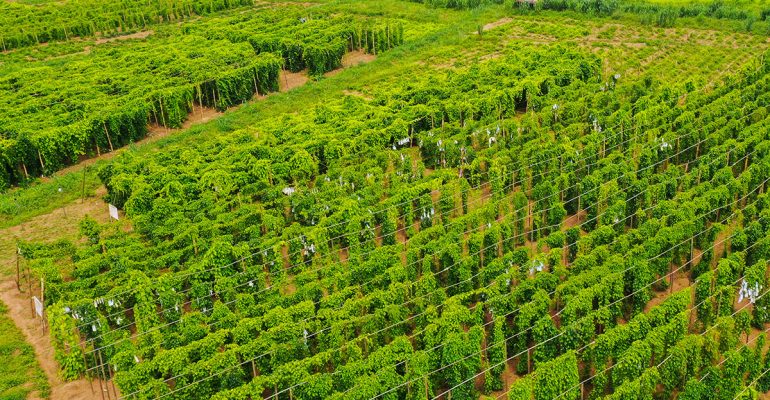
This project focuses to generate novel genetic variation in yam (Dioscorea spp.) to improve plant architecture with the goal of reducing labor and environmental damage associated with plant staking, while enabling mechanized farming. By developing gene-edited, semi-dwarf varieties of Dioscorea rotundata (white yam) through CRISPR-based technology, the project seeks to develop a semi-dwarf, bushy architecture that eliminates the need for staking, making yam cultivation less lalabor-intensive, more cost-effective and suitable for mechanization. By reducing labor and input costs, optimizing land use, and improving resilience to climate variability, these innovations will enhance the profitability and sustainability of yam farming. This work aligns with global goals for sustainable agriculture, directly benefiting yam farmers and contributing to food security across Africa.
Aim
To optimize yam plant architecture using gene editing to reduce labor and environmental impacts from staking while enabling mechanized farming.
Objectives
- To identify and characterize genes associated with yam’s growth habit, focussing on vine elongation and internode development.
- To design gene-editing strategy for the semi-dwarf trait.
- To evaluate semi-dwarf gene-edited yam plants for reduced vine length and improved internode structure.
- To conduct a gender-focused analysis on trait preferences and labor impacts in yam cultivation.
Outcomes
- Development of semi-dwarf yam varieties that are more suited to mechanized farming.
- Improved yam productivity and sustainability in Sub-Saharan Africa.
Partners
- Pairwise
Target Country
- Nigeria
Research Location
- Kenya: Nairobi
- Nigeria: Ibadan
- USA: North Carolina