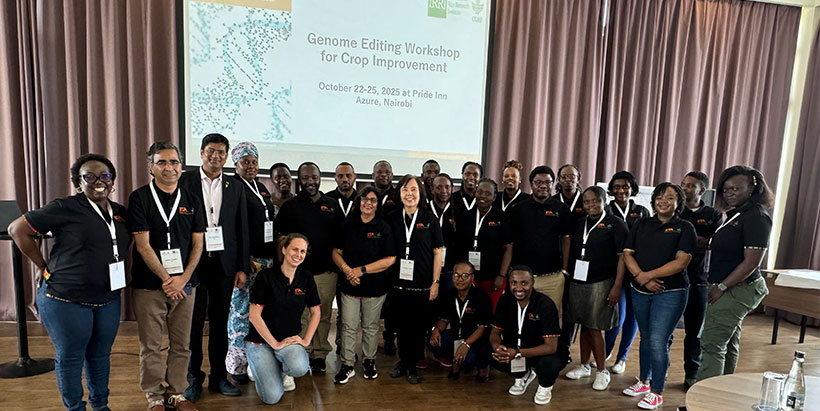
A major step toward the future of agricultural innovation unfolded as scientists, researchers, and regulators gathered in Nairobi, Kenya, for the Genome Editing in Crops Workshop from 22 to 25 October. Organized by IITA–CGIAR in collaboration with the International Rice Research Institute (IRRI), this workshop aimed to harness cutting-edge genome editing technologies, such as CRISPR-Cas, to address key agricultural challenges like drought, disease, and pest resistance.
A unique aspect of this event was its emphasis on bridging the gap between science and regulation. It brought together leading researchers and regulators from six different African countries—Ethiopia, Ghana, Kenya, Malawi, Nigeria, and Rwanda—to explore the scientific advancements and regulatory frameworks necessary for genome editing innovations to safely reach farmers and markets.
In addition to technical training, participants benefited from in-depth sessions on intellectual property (IP) and regulatory frameworks, which are essential for understanding the broader landscape in which genome-edited crops are developed and commercialized. These discussions covered patenting, licensing, and global biosafety protocols, equipping scientists and regulators with the knowledge to navigate the complex legal considerations of agricultural biotechnology.
The workshop recognized the importance of building public trust and ensuring the successful implementation of genome editing technologies and included a comprehensive module on stakeholder mapping and engagement. Participants were trained to identify key stakeholders—from farmers and policymakers to consumers and advocacy groups—and develop strategies to effectively communicate the benefits and address concerns related to genome-edited crops. Understanding these dynamics is crucial for creating an environment where new agricultural technologies can thrive and be accepted by the public.
Leena Tripathi, Director of the IITA Eastern Africa Hub and Biotechnology Program Lead, emphasized the importance of interdisciplinary efforts: “The success of genome editing in agriculture depends not only on scientific breakthroughs but also on strong regulatory frameworks and meaningful engagement with all stakeholders. This workshop provides a critical opportunity to integrate these elements.”