
35 learn about gene editing and its communication

Scientists and communication specialists from various Kenyan organizations participated in a four-day training workshop to improve gene editing communication. Thirty-five participants graduated from the workshop and received certificates.

Participants, all of whom are from Kenya, included scientists conducting gene editing research, science writers, representatives from academia, MSc and PhD students in biotechnology and breeding, and a representative of a farmers’ consortium.

The Alliance for Science Director for Africa, Patricia Nanteza, congratulated the graduates on this milestone. She charged them to radiate the lessons learned in their work to foster greater public appreciation of gene editing and its benefits. Nanteza added that each participant had acquired the designation of Science Ally with the graduation, commissioning them as science ambassadors to the world.
Read more

IITA paper on genome editing among most read Open Access journal

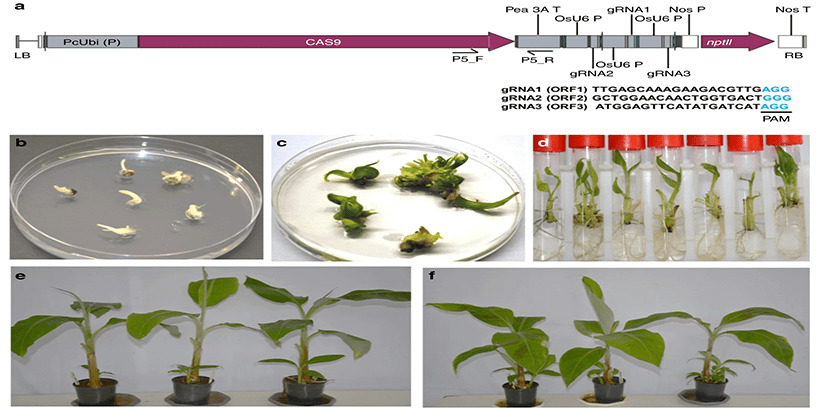
A paper by an IITA Principal Scientist, Leena Tripathi, on ‘CRISPR/Cas9 editing of endogenous banana streak virus in the B genome of Musa spp. overcomes a major challenge in banana breeding’ was the second most downloaded paper in Communications Biology, an open access (OA) journal.

The paper has had more than 12,000 downloads to date, 51 citations, 245 tweets, 16 news outlets, two Facebook pages quoting it, three blogs, one Wikipedia page, and 113 Mendeley citations. Communications Biology released these details in celebration of Open Access Week. Open Access journals do not charge subscription fees, i.e., the publications are available to the public free of charge.

The article is about the integrated endogenous banana streak virus (eBSV) in the B genome of plantain (AAB). Banana Streak Virus presents a significant challenge for breeding and disseminating hybrids since it activates into infectious viral particles under stress. Seventy-five percent of the edited events were asymptomatic compared to the non-edited control plants under water stress conditions, confirming the inactivation of eBSV into infectious viral particles.

The study paves the way for improving B genome germplasm and its use in breeding programs to produce hybrids that can be globally disseminated.

Read more