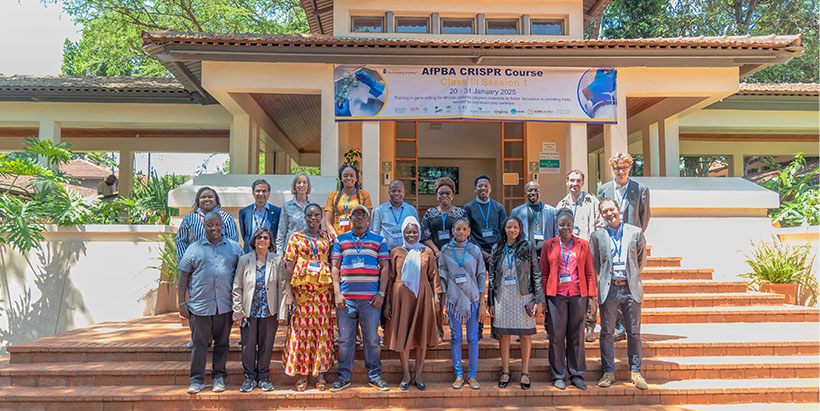
IITA and partners launch AfPBA CRISPR Class III Training to empower Africa’s Crop Improvement Scientists

IITACGIAR, a member of the African Orphan Crops Consortium (AOCC) in partnership with the University of California, Davis (UC Davis) and the Innovative Genomics Institute (IGI) at UC Berkeley, has officially launched the third cohort of its renowned African Plant Breeding Academy (AfPBA) CRISPR training program in Nairobi, Kenya. The program equips African molecular scientists with cutting-edge knowledge, skills, and tools to revolutionize agriculture across the continent.

The AfPBA CRISPR Class III, commencing on 20 January 2025, will provide 11 selected scientists from five African countries with advanced training in the know-how of genome editing using CRISPR-Cas technology. The initiative is designed to empower participants to develop more resilient crops to climate change, pests, and diseases—critical for addressing Africa’s food and nutritional security challenges.
Read more

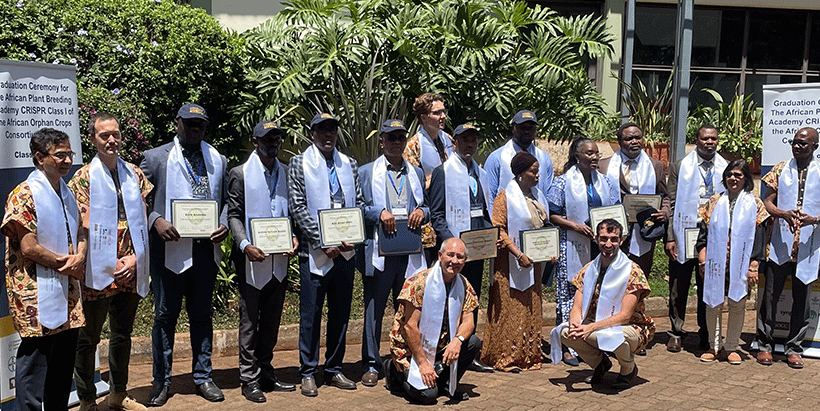
Inaugural class of CRISPR technology graduates poised to shape the future of agriculture

As the world’s foremost experts unite in their efforts to combat food insecurity and malnutrition, both exacerbated by climate change and responsible for stunting over 30% of children under the age of five, a group of new scientists emerged in October, equipped to enhance crop production through the art of gene editing.

The ten doctoral-level scientists from six different African nations, including Ethiopia, Ghana, Kenya, Malawi, Morocco, and Nigeria, have undergone an intensive six-week training program hosted by the African Plant Breeding Academy (APBA) to refine their skills in advanced crop breeding. The training focused on Clustered Regularly Interspaced Short Palindromic Repeats (CRISPR), which enables precise, targeted alterations to DNA sequences in living organisms, particularly crops.

Read more

Genome editing: New breeding tool with potential to sustain agriculture in Africa

Climate change affects the environment extensively in socioeconomic and related sectors, including agriculture and food and nutritional security for the growing global population. To address this urgent need, Africa needs to adopt sustainable intensification of agriculture to close the yield gap in staple crops, where tools, including biotechnology and traditional approaches, are recommended for crop improvement.

The recent study titled “Genome Editing for Sustainable Agriculture in Africa” published in the journal Frontiers in Genome Editing revealed the need and efficiency of exploring genome editing as an addition to conventional technologies for developing improved crop varieties.

The study noted that CRISPR-based genome editing has rapidly become the most prevalent genetic engineering approach for developing improved crop varieties because of its simplicity, efficiency, specificity, and ease of use. Genome editing technologies allow targeted manipulation of the plant genomes, accelerating breeding efforts to develop improved crop varieties. It can also reduce inputs such as fertilizers and pesticides, increase yields, improve nutrition, and develop climate-resilient crops

Read more

Genome editing: New breeding tool with potential to sustain agriculture in Africa

Climate change affects the environment extensively in socioeconomic and related sectors, including agriculture and food and nutritional security for the growing global population. To address this urgent need, Africa needs to adopt sustainable intensification of agriculture to close the yield gap in staple crops, where tools, including biotechnology and traditional approaches, are recommended for crop improvement.

The recent study titled “Genome Editing for Sustainable Agriculture in Africa” published in the journal Frontiers in Genome Editing revealed the need and efficiency of exploring genome editing as an addition to conventional technologies for developing improved crop varieties.

The study noted that CRISPR-based genome editing has rapidly become the most prevalent genetic engineering approach for developing improved crop varieties because of its simplicity, efficiency, specificity, and ease of use. Genome editing technologies allow targeted manipulation of the plant genomes, accelerating breeding efforts to develop improved crop varieties. It can also reduce inputs such as fertilizers and pesticides, increase yields, improve nutrition, and develop climate-resilient crops.

Read more

IITA paper on genome editing among most read Open Access journal

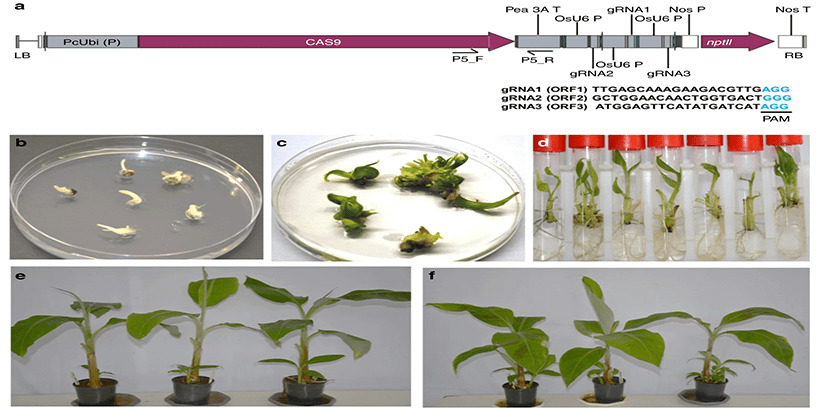
A paper by an IITA Principal Scientist, Leena Tripathi, on ‘CRISPR/Cas9 editing of endogenous banana streak virus in the B genome of Musa spp. overcomes a major challenge in banana breeding’ was the second most downloaded paper in Communications Biology, an open access (OA) journal.

The paper has had more than 12,000 downloads to date, 51 citations, 245 tweets, 16 news outlets, two Facebook pages quoting it, three blogs, one Wikipedia page, and 113 Mendeley citations. Communications Biology released these details in celebration of Open Access Week. Open Access journals do not charge subscription fees, i.e., the publications are available to the public free of charge.

The article is about the integrated endogenous banana streak virus (eBSV) in the B genome of plantain (AAB). Banana Streak Virus presents a significant challenge for breeding and disseminating hybrids since it activates into infectious viral particles under stress. Seventy-five percent of the edited events were asymptomatic compared to the non-edited control plants under water stress conditions, confirming the inactivation of eBSV into infectious viral particles.

The study paves the way for improving B genome germplasm and its use in breeding programs to produce hybrids that can be globally disseminated.

Read more

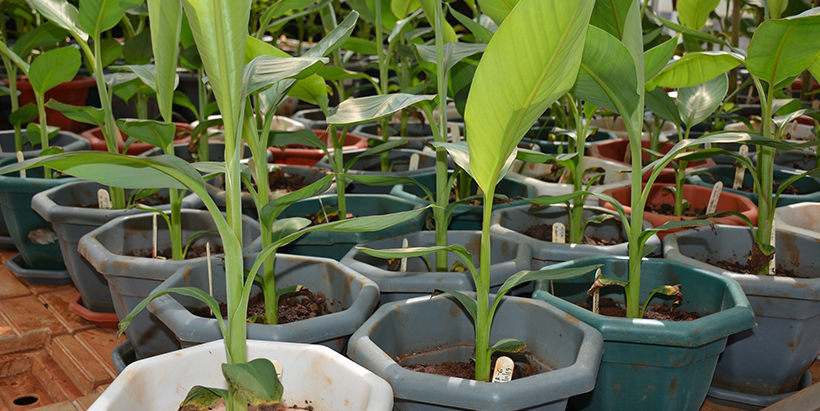
New study: Use of genome editing confers resistance to Banana Xanthomonas wilt (BXW) disease

Disease-resistant varieties developed through genome editing are an effective strategy for managing diseases in food crops, a new IITA study shows.

The study shows that recent advances in CRISPR/Cas-based genome editing can accelerate banana improvement. The study, published in May in the Plant Biotechnology Journal, was conducted at IITA-Nairobi between 2019 and 2020.

‘‘It is urgent to close the yield gap in staple crops and enhance food production to feed the world. The application of genome editing can improve agricultural productivity, thus boosting food security,’’ says Leena Tripathi, the lead author.

The researchers used CRISPR/Cas9 based genome editing to knock down the DMR6 Orthologue in banana for developing resistance to Banana Xanthomonas Wilt (BXW) disease.

Read more