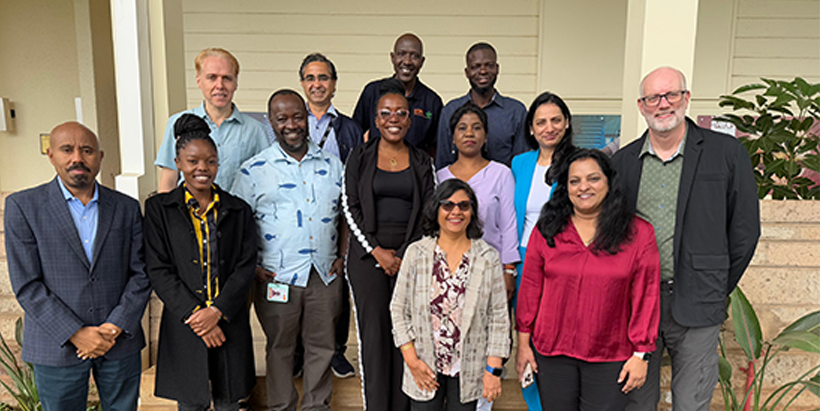
YOAGE project team holds annual review meeting in Nairobi

With one successful year down, the Yam Optimized Architecture through Gene Editing (YOAGE) project team convened in Nairobi for its annual review meeting. The gathering brought together colleagues from IITACGIAR and project partners from Pairwise, USA, to assess the progress made and chart the path forward. Dr Nic Bate, Senior Program Officer from the Gates Foundation, also joined in to listen to the milestones achieved so far and advise on future planning, aligning with the foundation’s strategy.

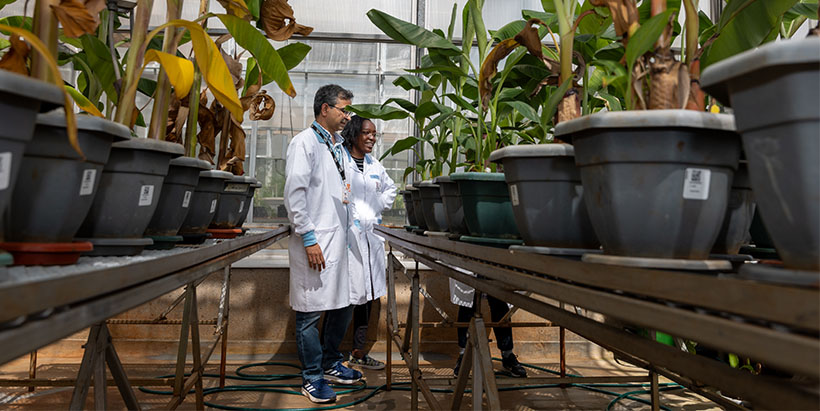
The meeting provided an opportunity for the team to present updates on ongoing work, exchange insights on technical progress, and strengthen collaborative efforts between the teams. It also featured a visit to IITA’s biotechnology facilities in Nairobi, where participants viewed ongoing gene editing research and interacted with the scientists behind the work.
Read more

Building skills in genome editing for African agriculture

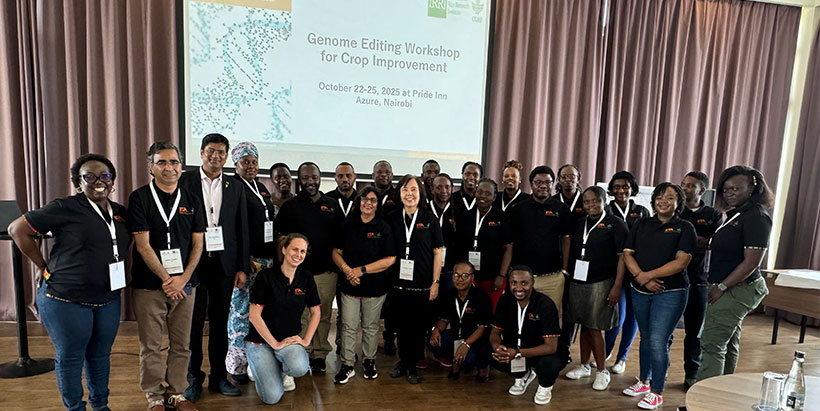
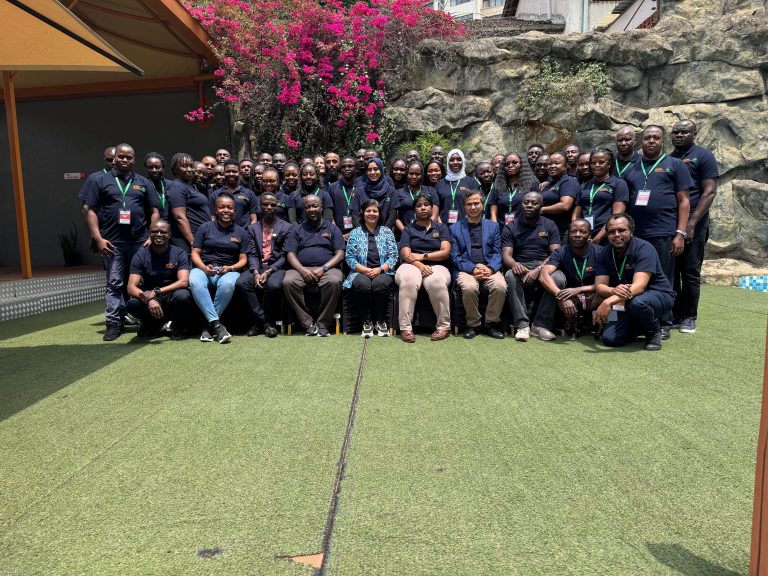
From 2 to 5 September 2025, the IITACGIAR Biotechnology program hosted a four-day training workshop on Genome Editing in Nairobi, Kenya. The workshop brought together young African scientists from Burundi, Ethiopia, Kenya, Nigeria, Tanzania, Uganda, and Zimbabwe, eager to deepen their knowledge and practical skills in this technology.

The workshop blended theory with practice. Participants explored the foundations of CRISPR/Cas systems. They then moved into hands-on sessions covering gRNA design, genome browsing, BLAST searches, CRISPR reagent delivery systems, plant transformation, genotyping, and phenotyping. Case studies on genome editing for crop improvement were also shared, focusing on banana and cereal crops, giving participants a clear view of how these technologies are already being applied to address agricultural challenges.

Read more

IITA scientist highlights advances in genome engineering to tackle food insecurity in Africa

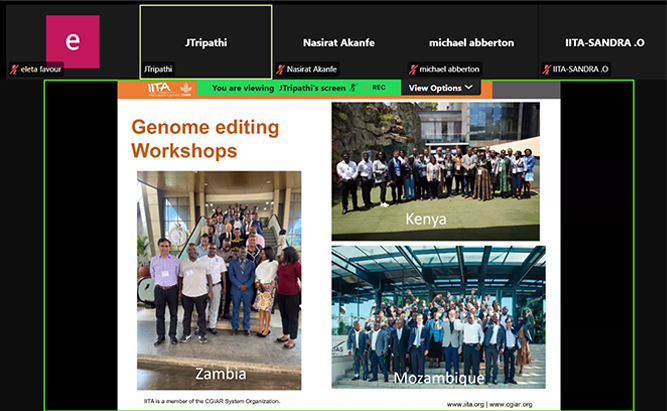
IITACGIAR organized a scientific seminar on 27 August, themed “Genome engineering of African staple food crops.” The event, anchored by IITA Director of the West Africa Hub, Michael Abberton, showcased the pioneering research work of IITA Plant Transformation Specialist, Jaindra Tripathi.

In his presentation, Tripathi highlighted the urgency of addressing global hunger and food insecurity, particularly in Africa, where the situation is increasingly critical. He noted that hunger on the continent has been rising since 2010, with approximately 61% of Africans currently food insecure. He added that 38% of the world’s hungry people live in Africa, and 20% of the continent’s population is undernourished. Compounding the problem, the cost of a healthy diet in Africa increased by 53% between 2020 and 2021.

Read more

IITA scientists achieve gene editing breakthrough for Banana Wilt Resistance

A landmark study published in Nature’s Communications Biology by IITA scientists showcases how CRISPR-based gene editing offers hope for East Africa’s banana farmers.

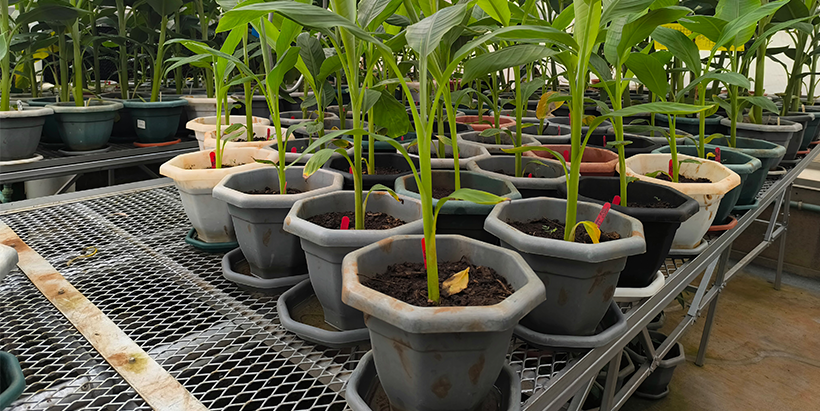
Scientists at IITA-CGIAR have made a major breakthrough in the fight against Banana Xanthomonas Wilt (BXW), a devastating bacterial disease threatening banana crops across East and Central Africa. The findings, recently published in Communications Biology, the prestigious journal from the Nature portfolio, demonstrates how gene editing can be used to develop disease-resistant banana varieties.

Read more

Wiley recognizes IITA’s reviewed article on banana improvement as a top-cited study

A review paper on the genetic improvement of bananas has been selected as one of Wiley’s most cited papers, highlighting its critical role in improving one of the world’s most important staple crops.

Published in The Plant Genome, the research probes into CRISPR/Cas genome editing techniques that could impact banana breeding, making the crop more resilient to devastating diseases. Led by a team of scientists from the International Institute of Tropical Agriculture (IITA), the widely referenced paper “Precision Genetics Tools for Genetic Improvement of Banana” addresses long-standing challenges in banana production and offers a precise, efficient, and sustainable solution for farmers worldwide.

Read more

Unlocking the future of crop improvement: IITA champions genome editing for African agriculture

In transforming African agriculture, the International Institute of Tropical Agriculture (IITA) is tapping into cutting-edge genome editing tools to fast-track crop improvement. With technologies like CRISPR at its core, IITA is pioneering a new era in plant breeding—where precision, speed, and innovation are driving the development of resilient, high-yielding crops tailored for the continent’s toughest challenges.

For decades, conventional breeding has served as the backbone of crop improvement. By crossing parent plants with desirable traits, breeders have been able to gradually improve yields, enhance disease resistance, and adapt crops to local conditions. However, this process can be time-consuming, unpredictable, and limited particularly for clonally propagated crops. It is often inadequate when addressing complex traits like drought tolerance or resistance to evolving pathogens. For tropical crops like banana, yam, and cassava—staples for millions across Africa—the challenges are even more pronounced due to limited genetic diversity and complex inheritance patterns.

Read more

African Plant Breeding Academy celebrates graduation of CRISPR course second cohort

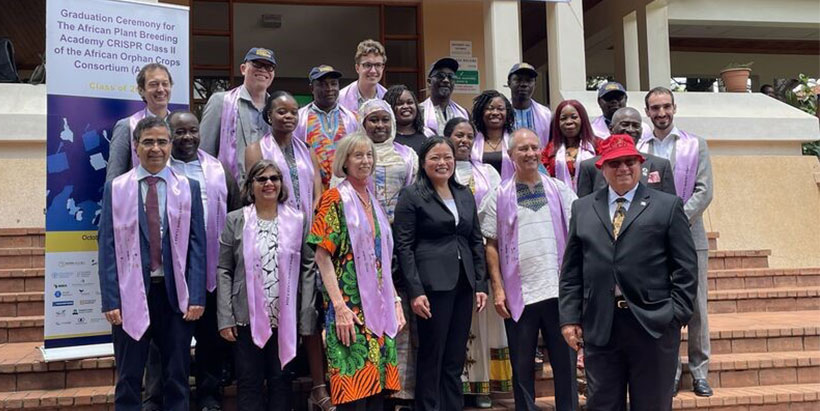
IITACGIAR, in partnership with the University of California, Davis (UC Davis), the Innovative Genomics Institute (IGI) at UC Berkeley, and the African Orphan Crops Consortium (AOCC), celebrated a milestone on 11 October as the participants of cohort II graduated from the African Plant Breeding Academy (AfPBA) CRISPR course. The training is a part of IITA’s broader efforts to equip African scientists with cutting-edge skills in agricultural biotechnology, particularly applying CRISPR-based genome editing to improve crop resilience and productivity.

The graduating class included 11 scientists from 8 African countries: Burkina Faso, Ethiopia, Ghana, Kenya, Malawi, Mozambique, Nigeria, and South Africa. These researchers underwent an intensive program covering both theoretical and practical aspects of genome editing with three two-week sessions at IITA-Nairobi, hosted by  ILRI and World Agroforestry in Nairobi, Kenya. The course was designed to address the growing demand for expertise in CRISPR technology to address key agricultural challenges such as disease resistance, drought tolerance, nutrition enhancement, and crop yield improvement.

Read more…

Study unveils Cas-CLOVER as a highly efficient genome editing technology in banana

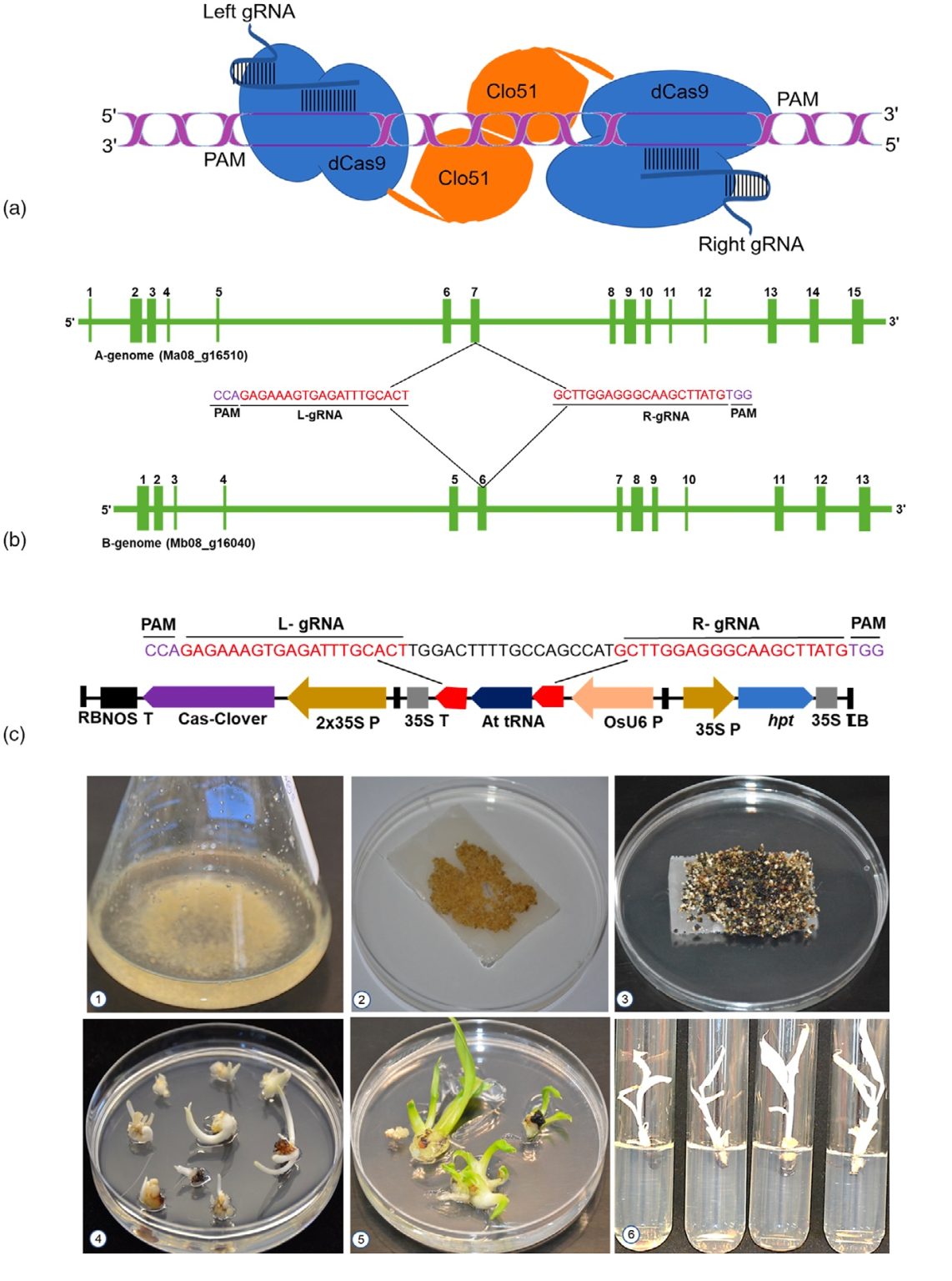
In a landmark development for agricultural biotechnology, a pioneering study conducted by the Biotechnology team at IITACGIAR, in collaboration with Demeetra AgBio Inc., has unveiled Cas-CLOVER as a novel, precise and highly efficient genome editing tool for banana. The findings of this study promise to revolutionize banana cultivation by addressing critical challenges faced in traditional breeding.

Despite being a staple in the diets of millions worldwide, banana has long been plagued by various hurdles in their genetic improvement. These include issues like low genetic variability in germplasm, polyploidy, protracted production cycles, and the sterility of many cultivars. Genome editing has emerged as a transformative technique to combat these obstacles and develop improved banana varieties with enhanced disease resistance and increased yield potential.

Read more

Over 50 scientists and science communicators trained to communicate on genome editing

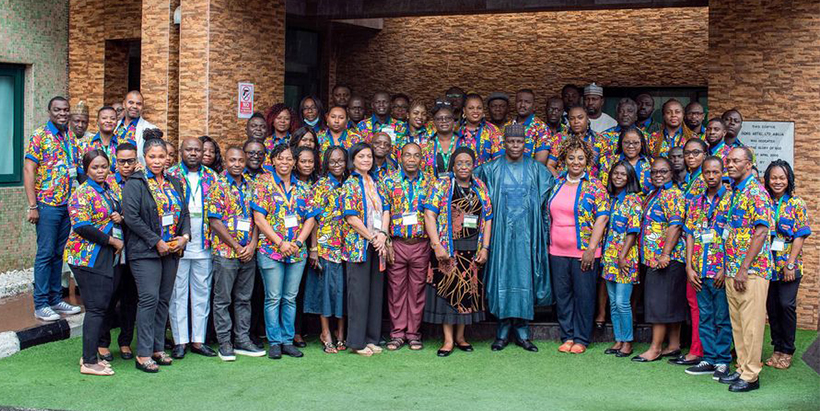
The Alliance for Science (AFS), in conjunction with the Open Forum for Agricultural Biotechnology (OFAB) Nigeria, Boyce Thomson Institute, and IITACGIAR, organized a 3-day training for scientists and science communicators on Communicating Gene Editing in Abuja, Nigeria. The training took place on 19−21 September and aimed to provide participants with the appropriate communication skills to communicate on gene editing for food sustainability, nutrition, and security in Africa.

Executive Director of the Alliance for Science, Dr Sheila Ochugboju, opened the event with a keynote speech. She recognized the need for such training events, as a former scientist herself, who completed her postdoctoral research in Oxford University, working on genetic engineering for biological pesticides. She was visibly moved to return to her home country Nigeria, to welcome scientists and communicators creating an enabling environment for world-class science and innovation.

Also, IITA Head of Abuja station, and BASICS II project leader, Prof. Sanni Lateef in his remarks at the opening event encouraged the next generation of scientist-participants to exceed the achievements of the older scientists in terms of scientific research and innovations. “Science is evolving, and we need a new generation of science inventors to keep up with it,” he said.

OFAB Country Coordinator Dr Rose Gidado and IITA Plantain Transformation Scientist Valentine Ntui explained the science of gene editing. They pointed out that genome editing is a revolution for science and medicine that takes advantage of the cell’s DNA repair mechanisms, resulting in many different molecular outcomes.

Read more