Call for Applications: Genome Editing in Plants –Training Course

We are pleased to invite applications for a week-long, intensive training course on Genome Editing in Plants, scheduled to take place from 2nd to 5th September 2025. This practical and theory-based course is designed for early-career scientists and professionals working in plant biotechnology, molecular biology, and crop improvement.

Course Overview

This training offers participants an in-depth understanding of CRISPR-based genome editing tools and their application in crop improvement. Through lectures, case studies, and hands-on laboratory sessions, participants will learn:

  • Basics of Genome Editing
  • Designing genome editing constructs
  • Plant transformation and regeneration
  • Analysis of genome edited lines for detection of target mutations
  • Phenotyping of genome edited lines for desired traits
  • Understand regulatory and biosafety considerations
  • Genome editing application to solve real-world agricultural challenges
  • Effectively communicate scientific work to stakeholders, including policymakers, farmers, and the general public

Applicants must meet the following criteria:

  • Hold at least a Master’s degree (MSc) in plant breeding, molecular biology, genetics, biotechnology, or a related discipline,
    OR
  • Have a minimum of two (2) years’ experience working in a molecular biology laboratory

Participants will benefit from:

  • Expert instruction by leading plant genome editing researchers
  • Practical skills in CRISPR/Cas system applications
  • A strong foundation in experimental design and data analysis
  • Science communication and stakeholder engagement skills
  • Networking opportunities with fellow scientists and professionals
  • A certificate of participation upon successful completion

Application Deadline: 5 August 2025

How to Apply

Interested candidates should complete the online application form by 5th August 2025. Selected participants will be notified by mid-August.
Apply Here

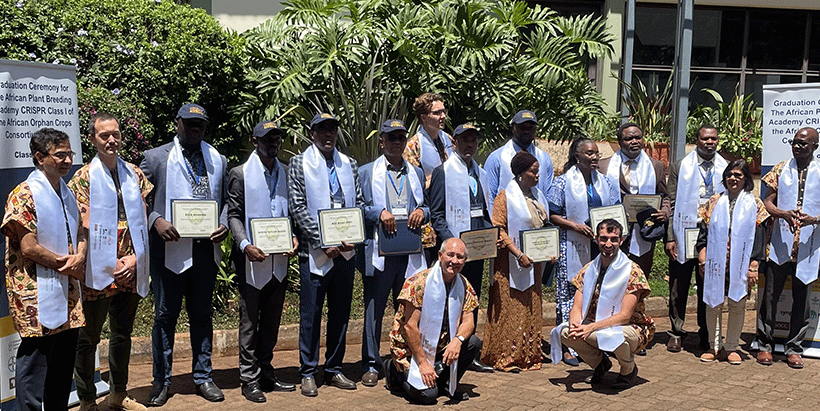
Inaugural class of CRISPR technology graduates poised to shape the future of agriculture

As the world’s foremost experts unite in their efforts to combat food insecurity and malnutrition, both exacerbated by climate change and responsible for stunting over 30% of children under the age of five, a group of new scientists emerged in October, equipped to enhance crop production through the art of gene editing.

The ten doctoral-level scientists from six different African nations, including Ethiopia, Ghana, Kenya, Malawi, Morocco, and Nigeria, have undergone an intensive six-week training program hosted by the African Plant Breeding Academy (APBA) to refine their skills in advanced crop breeding. The training focused on Clustered Regularly Interspaced Short Palindromic Repeats (CRISPR), which enables precise, targeted alterations to DNA sequences in living organisms, particularly crops.

Read more

Genome editing: New breeding tool with potential to sustain agriculture in Africa

Climate change affects the environment extensively in socioeconomic and related sectors, including agriculture and food and nutritional security for the growing global population. To address this urgent need, Africa needs to adopt sustainable intensification of agriculture to close the yield gap in staple crops, where tools, including biotechnology and traditional approaches, are recommended for crop improvement.

The recent study titled “Genome Editing for Sustainable Agriculture in Africa” published in the journal Frontiers in Genome Editing revealed the need and efficiency of exploring genome editing as an addition to conventional technologies for developing improved crop varieties.

The study noted that CRISPR-based genome editing has rapidly become the most prevalent genetic engineering approach for developing improved crop varieties because of its simplicity, efficiency, specificity, and ease of use. Genome editing technologies allow targeted manipulation of the plant genomes, accelerating breeding efforts to develop improved crop varieties. It can also reduce inputs such as fertilizers and pesticides, increase yields, improve nutrition, and develop climate-resilient crops

Read more

Genome editing: New breeding tool with potential to sustain agriculture in Africa

Climate change affects the environment extensively in socioeconomic and related sectors, including agriculture and food and nutritional security for the growing global population. To address this urgent need, Africa needs to adopt sustainable intensification of agriculture to close the yield gap in staple crops, where tools, including biotechnology and traditional approaches, are recommended for crop improvement.

The recent study titled “Genome Editing for Sustainable Agriculture in Africa” published in the journal Frontiers in Genome Editing revealed the need and efficiency of exploring genome editing as an addition to conventional technologies for developing improved crop varieties.

The study noted that CRISPR-based genome editing has rapidly become the most prevalent genetic engineering approach for developing improved crop varieties because of its simplicity, efficiency, specificity, and ease of use. Genome editing technologies allow targeted manipulation of the plant genomes, accelerating breeding efforts to develop improved crop varieties. It can also reduce inputs such as fertilizers and pesticides, increase yields, improve nutrition, and develop climate-resilient crops.

Read more