Call for Applications: Genome Editing in Plants –Training Course

We are pleased to invite applications for a week-long, intensive training course on Genome Editing in Plants, scheduled to take place from 2nd to 5th September 2025. This practical and theory-based course is designed for early-career scientists and professionals working in plant biotechnology, molecular biology, and crop improvement.

Course Overview

This training offers participants an in-depth understanding of CRISPR-based genome editing tools and their application in crop improvement. Through lectures, case studies, and hands-on laboratory sessions, participants will learn:

  • Basics of Genome Editing
  • Designing genome editing constructs
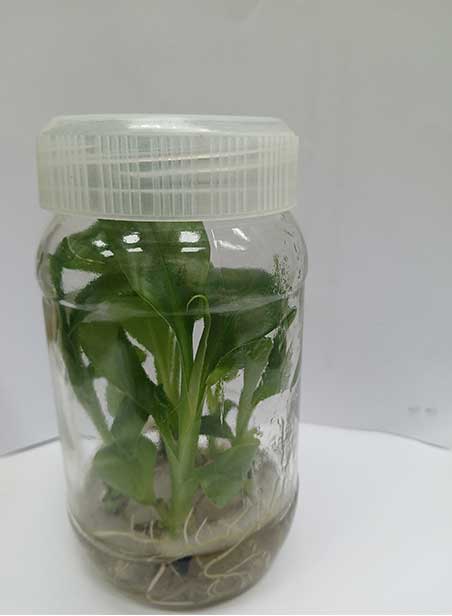
  • Plant transformation and regeneration
  • Analysis of genome edited lines for detection of target mutations
  • Phenotyping of genome edited lines for desired traits
  • Understand regulatory and biosafety considerations
  • Genome editing application to solve real-world agricultural challenges
  • Effectively communicate scientific work to stakeholders, including policymakers, farmers, and the general public

Applicants must meet the following criteria:

  • Hold at least a Master’s degree (MSc) in plant breeding, molecular biology, genetics, biotechnology, or a related discipline,
    OR
  • Have a minimum of two (2) years’ experience working in a molecular biology laboratory

Participants will benefit from:

  • Expert instruction by leading plant genome editing researchers
  • Practical skills in CRISPR/Cas system applications
  • A strong foundation in experimental design and data analysis
  • Science communication and stakeholder engagement skills
  • Networking opportunities with fellow scientists and professionals
  • A certificate of participation upon successful completion

Application Deadline: 5 August 2025

How to Apply

Interested candidates should complete the online application form by 5th August 2025. Selected participants will be notified by mid-August.
Apply Here

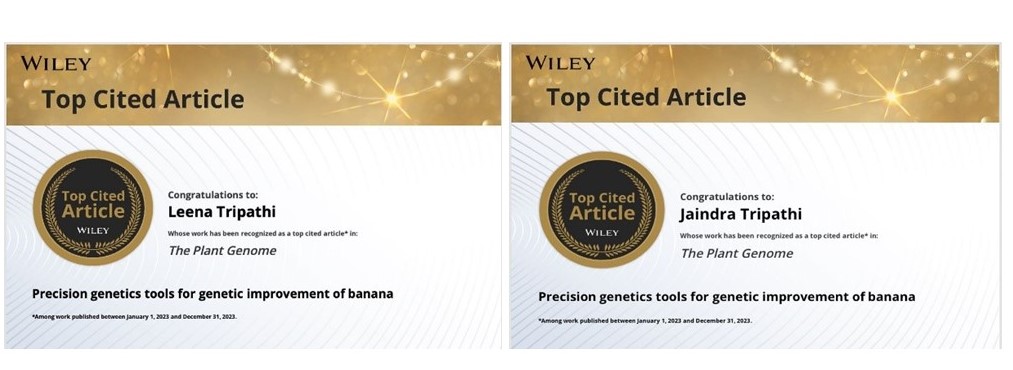
Wiley recognizes IITA’s reviewed article on banana improvement as a top-cited study

A review paper on the genetic improvement of bananas has been selected as one of Wiley’s most cited papers, highlighting its critical role in improving one of the world’s most important staple crops.

Published in The Plant Genome, the research probes into CRISPR/Cas genome editing techniques that could impact banana breeding, making the crop more resilient to devastating diseases. Led by a team of scientists from the International Institute of Tropical Agriculture (IITA), the widely referenced paper “Precision Genetics Tools for Genetic Improvement of Banana” addresses long-standing challenges in banana production and offers a precise, efficient, and sustainable solution for farmers worldwide.

Read more

Unlocking the future of crop improvement: IITA champions genome editing for African agriculture

In transforming African agriculture, the International Institute of Tropical Agriculture (IITA) is tapping into cutting-edge genome editing tools to fast-track crop improvement. With technologies like CRISPR at its core, IITA is pioneering a new era in plant breeding—where precision, speed, and innovation are driving the development of resilient, high-yielding crops tailored for the continent’s toughest challenges.

For decades, conventional breeding has served as the backbone of crop improvement. By crossing parent plants with desirable traits, breeders have been able to gradually improve yields, enhance disease resistance, and adapt crops to local conditions. However, this process can be time-consuming, unpredictable, and limited particularly for clonally propagated crops. It is often inadequate when addressing complex traits like drought tolerance or resistance to evolving pathogens. For tropical crops like banana, yam, and cassava—staples for millions across Africa—the challenges are even more pronounced due to limited genetic diversity and complex inheritance patterns.

Read more

Gene-Edited Superfoods: Addressing Global Nutrition

Farmers, scientists, and consumers advocate for gene-edited crops as a solution to global challenges, emphasizing the need for informed public dialogue and regulatory reform.

On May 13, 2024, the University of Milan announced a breakthrough in gene editing. The first-ever field trial for a gene-edited crop in Italy—risotto rice tweaked to resist the destructive rice blast fungus.

Today is a revolutionary day for biotechnologists,” said lead researcher Vittoria Brambilla at the time.

A month later, however, the crop was destroyed in a single night. Not by fungus, but by unknown vandals.

Read more

Inaugural class of CRISPR technology graduates poised to shape the future of agriculture

As the world’s foremost experts unite in their efforts to combat food insecurity and malnutrition, both exacerbated by climate change and responsible for stunting over 30% of children under the age of five, a group of new scientists emerged in October, equipped to enhance crop production through the art of gene editing.

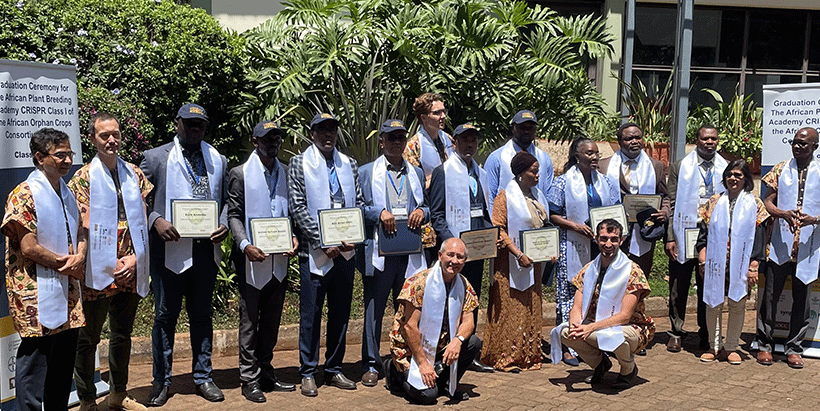
The ten doctoral-level scientists from six different African nations, including Ethiopia, Ghana, Kenya, Malawi, Morocco, and Nigeria, have undergone an intensive six-week training program hosted by the African Plant Breeding Academy (APBA) to refine their skills in advanced crop breeding. The training focused on Clustered Regularly Interspaced Short Palindromic Repeats (CRISPR), which enables precise, targeted alterations to DNA sequences in living organisms, particularly crops.

Read more

Genome editing: New breeding tool with potential to sustain agriculture in Africa

Climate change affects the environment extensively in socioeconomic and related sectors, including agriculture and food and nutritional security for the growing global population. To address this urgent need, Africa needs to adopt sustainable intensification of agriculture to close the yield gap in staple crops, where tools, including biotechnology and traditional approaches, are recommended for crop improvement.

The recent study titled “Genome Editing for Sustainable Agriculture in Africa” published in the journal Frontiers in Genome Editing revealed the need and efficiency of exploring genome editing as an addition to conventional technologies for developing improved crop varieties.

The study noted that CRISPR-based genome editing has rapidly become the most prevalent genetic engineering approach for developing improved crop varieties because of its simplicity, efficiency, specificity, and ease of use. Genome editing technologies allow targeted manipulation of the plant genomes, accelerating breeding efforts to develop improved crop varieties. It can also reduce inputs such as fertilizers and pesticides, increase yields, improve nutrition, and develop climate-resilient crops.

Read more

35 learn about gene editing and its communication

Scientists and communication specialists from various Kenyan organizations participated in a four-day training workshop to improve gene editing communication. Thirty-five participants graduated from the workshop and received certificates.

Participants, all of whom are from Kenya, included scientists conducting gene editing research, science writers, representatives from academia, MSc and PhD students in biotechnology and breeding, and a representative of a farmers’ consortium.

The Alliance for Science Director for Africa, Patricia Nanteza, congratulated the graduates on this milestone. She charged them to radiate the lessons learned in their work to foster greater public appreciation of gene editing and its benefits. Nanteza added that each participant had acquired the designation of Science Ally with the graduation, commissioning them as science ambassadors to the world.

Read more

IITA paper on genome editing among most read Open Access journal

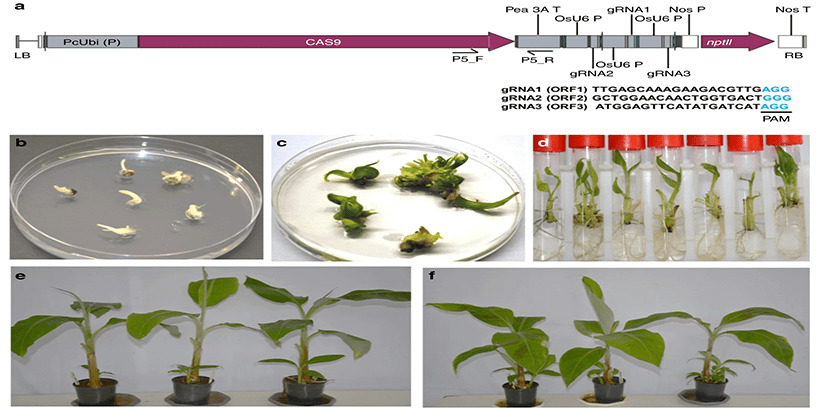
A paper by an IITA Principal Scientist, Leena Tripathi, on ‘CRISPR/Cas9 editing of endogenous banana streak virus in the B genome of Musa spp. overcomes a major challenge in banana breeding’ was the second most downloaded paper in Communications Biology, an open access (OA) journal.

The paper has had more than 12,000 downloads to date, 51 citations, 245 tweets, 16 news outlets, two Facebook pages quoting it, three blogs, one Wikipedia page, and 113 Mendeley citations. Communications Biology released these details in celebration of Open Access Week. Open Access journals do not charge subscription fees, i.e., the publications are available to the public free of charge.

The article is about the integrated endogenous banana streak virus (eBSV) in the B genome of plantain (AAB). Banana Streak Virus presents a significant challenge for breeding and disseminating hybrids since it activates into infectious viral particles under stress. Seventy-five percent of the edited events were asymptomatic compared to the non-edited control plants under water stress conditions, confirming the inactivation of eBSV into infectious viral particles.

The study paves the way for improving B genome germplasm and its use in breeding programs to produce hybrids that can be globally disseminated.

Read more

New study: Use of genome editing confers resistance to Banana Xanthomonas wilt (BXW) disease

Disease-resistant varieties developed through genome editing are an effective strategy for managing diseases in food crops, a new IITA study shows.

The study shows that recent advances in CRISPR/Cas-based genome editing can accelerate banana improvement. The study, published in May in the Plant Biotechnology Journal, was conducted at IITA-Nairobi between 2019 and 2020.

‘‘It is urgent to close the yield gap in staple crops and enhance food production to feed the world. The application of genome editing can improve agricultural productivity, thus boosting food security,’’ says Leena Tripathi, the lead author.

The researchers used CRISPR/Cas9 based genome editing to knock down the DMR6 Orthologue in banana for developing resistance to Banana Xanthomonas Wilt (BXW) disease.

Read more