IITA partners to deliver a new training course in gene editing for African scientists

The International Institute of Tropical Agriculture (IITA) is pleased to announce its partnership with the University of California, Davis (UC Davis), the Innovative Genomics Institute (IGI) at UC Berkeley, and the African Orphan Crops Consortium (AOCC), to introduce a new course on gene editing as part of the African Plant Breeding Academy (AfPBA). The course will empower 80-100 African scientists to apply the CRISPR-based gene-editing technologies to improve food crops important for African nutritional security for the essential traits.

CRISPR holds enormous promise for making precise desired genetic changes, enabling plant breeders to rise to the challenges of a changing climate and rapidly growing population at the demanded pace.

About the AfPBA CRISPR course

The AfPBA CRISPR course aims to train African scientists engaged in crop improvement, particularly those working in national research institutions desiring to implement or initiate gene-editing programs.

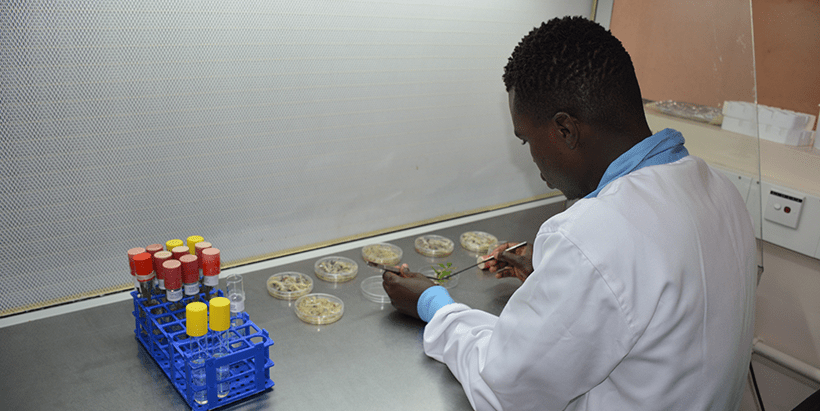
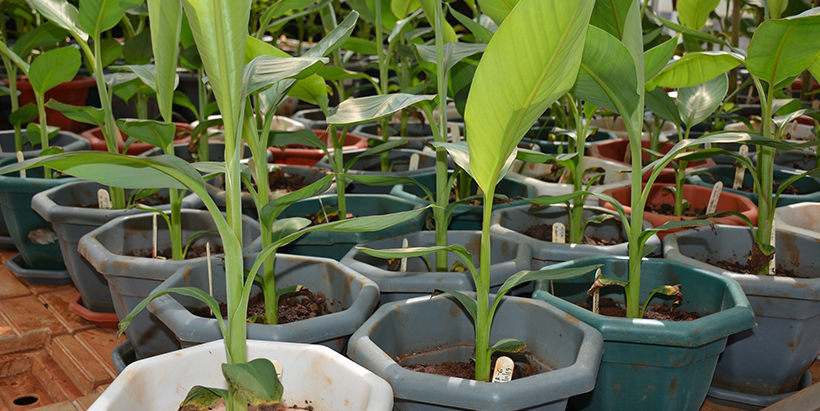
The course is an intensive 6-week program, delivered in three 2-week sessions at IITA hosted by B4A/ILRI hub and World Agroforestry in Nairobi, Kenya, over a period of a year and can accommodate 20 participants per course offering. It focuses on the steps to accomplish gene editing from design through validation. Using banana as a model plant, participants formulate objectives and targets, design plasmids, perform trait delivery to cells, regenerate plants, and validate results. The course prepares participants to develop key traits (e.g., nutritional content, disease resistance, longer shelf life) in crops aligned with their national and institutional priorities.

Uniqueness of AfPBA CRISPR course

This program involves post-course mentorship and ongoing support for sustained lab productivity beyond course completion and the founding of translational partnerships for commercialization and value chain development.

The course leverages genome sequence information being amassed by the AOCC on 101 African orphan crops, including a diversity of vegetables, fruits, nuts, legumes, oilseeds, cereals, and tree species.  Furthermore, it emphasizes the role of CRISPR in the overall scheme of improved cultivar development and in addressing the needs of smallholder farmers. It will support a Community of Practice strongly linked to the disciplines required for product development and launch, improved variety distribution, and farmer adoption.
Read more

Genome editing: New breeding tool with potential to sustain agriculture in Africa

Climate change affects the environment extensively in socioeconomic and related sectors, including agriculture and food and nutritional security for the growing global population. To address this urgent need, Africa needs to adopt sustainable intensification of agriculture to close the yield gap in staple crops, where tools, including biotechnology and traditional approaches, are recommended for crop improvement.

The recent study titled “Genome Editing for Sustainable Agriculture in Africa” published in the journal Frontiers in Genome Editing revealed the need and efficiency of exploring genome editing as an addition to conventional technologies for developing improved crop varieties.

The study noted that CRISPR-based genome editing has rapidly become the most prevalent genetic engineering approach for developing improved crop varieties because of its simplicity, efficiency, specificity, and ease of use. Genome editing technologies allow targeted manipulation of the plant genomes, accelerating breeding efforts to develop improved crop varieties. It can also reduce inputs such as fertilizers and pesticides, increase yields, improve nutrition, and develop climate-resilient crops

Read more

Genome editing: New breeding tool with potential to sustain agriculture in Africa

Climate change affects the environment extensively in socioeconomic and related sectors, including agriculture and food and nutritional security for the growing global population. To address this urgent need, Africa needs to adopt sustainable intensification of agriculture to close the yield gap in staple crops, where tools, including biotechnology and traditional approaches, are recommended for crop improvement.

The recent study titled “Genome Editing for Sustainable Agriculture in Africa” published in the journal Frontiers in Genome Editing revealed the need and efficiency of exploring genome editing as an addition to conventional technologies for developing improved crop varieties.

The study noted that CRISPR-based genome editing has rapidly become the most prevalent genetic engineering approach for developing improved crop varieties because of its simplicity, efficiency, specificity, and ease of use. Genome editing technologies allow targeted manipulation of the plant genomes, accelerating breeding efforts to develop improved crop varieties. It can also reduce inputs such as fertilizers and pesticides, increase yields, improve nutrition, and develop climate-resilient crops.

Read more

35 learn about gene editing and its communication

Scientists and communication specialists from various Kenyan organizations participated in a four-day training workshop to improve gene editing communication. Thirty-five participants graduated from the workshop and received certificates.

Participants, all of whom are from Kenya, included scientists conducting gene editing research, science writers, representatives from academia, MSc and PhD students in biotechnology and breeding, and a representative of a farmers’ consortium.

The Alliance for Science Director for Africa, Patricia Nanteza, congratulated the graduates on this milestone. She charged them to radiate the lessons learned in their work to foster greater public appreciation of gene editing and its benefits. Nanteza added that each participant had acquired the designation of Science Ally with the graduation, commissioning them as science ambassadors to the world.

Read more

IITA paper on genome editing among most read Open Access journal

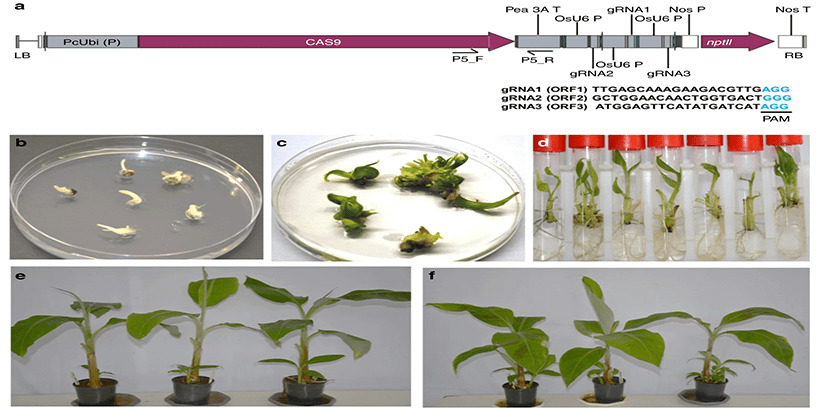
A paper by an IITA Principal Scientist, Leena Tripathi, on ‘CRISPR/Cas9 editing of endogenous banana streak virus in the B genome of Musa spp. overcomes a major challenge in banana breeding’ was the second most downloaded paper in Communications Biology, an open access (OA) journal.

The paper has had more than 12,000 downloads to date, 51 citations, 245 tweets, 16 news outlets, two Facebook pages quoting it, three blogs, one Wikipedia page, and 113 Mendeley citations. Communications Biology released these details in celebration of Open Access Week. Open Access journals do not charge subscription fees, i.e., the publications are available to the public free of charge.

The article is about the integrated endogenous banana streak virus (eBSV) in the B genome of plantain (AAB). Banana Streak Virus presents a significant challenge for breeding and disseminating hybrids since it activates into infectious viral particles under stress. Seventy-five percent of the edited events were asymptomatic compared to the non-edited control plants under water stress conditions, confirming the inactivation of eBSV into infectious viral particles.

The study paves the way for improving B genome germplasm and its use in breeding programs to produce hybrids that can be globally disseminated.

Read more

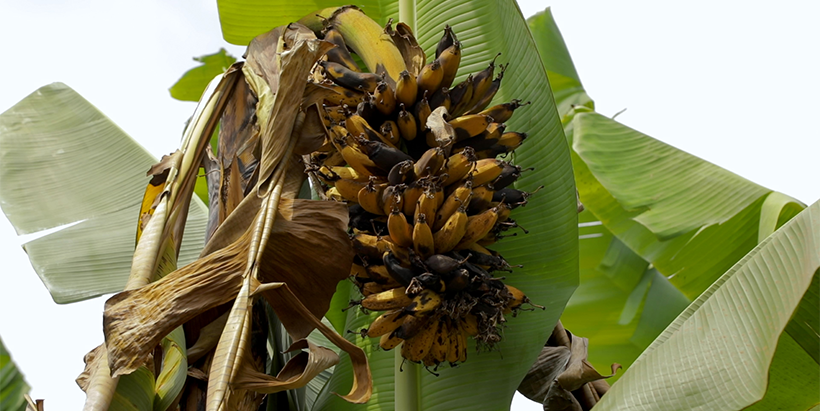
New study: Use of genome editing confers resistance to Banana Xanthomonas wilt (BXW) disease

Disease-resistant varieties developed through genome editing are an effective strategy for managing diseases in food crops, a new IITA study shows.

The study shows that recent advances in CRISPR/Cas-based genome editing can accelerate banana improvement. The study, published in May in the Plant Biotechnology Journal, was conducted at IITA-Nairobi between 2019 and 2020.

‘‘It is urgent to close the yield gap in staple crops and enhance food production to feed the world. The application of genome editing can improve agricultural productivity, thus boosting food security,’’ says Leena Tripathi, the lead author.

The researchers used CRISPR/Cas9 based genome editing to knock down the DMR6 Orthologue in banana for developing resistance to Banana Xanthomonas Wilt (BXW) disease.

Read more

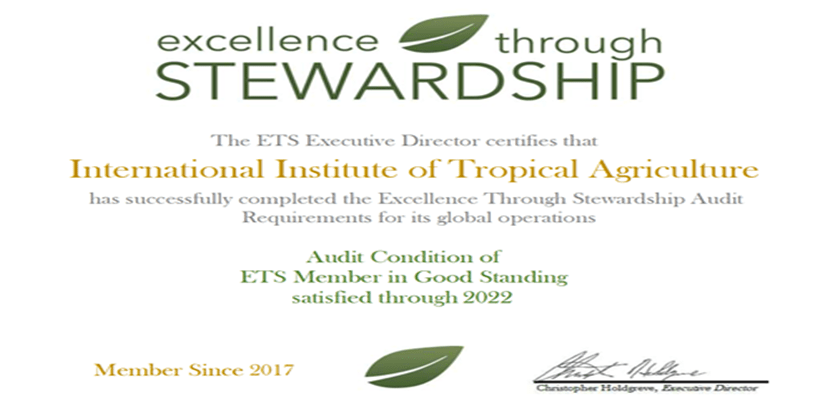
IITA gets biotechnology stewardship certification

After completing a three-year audit cycle, IITA has become a certified member of Excellence Through Stewardship (ETS). ETS is a global organization that promotes the adoption of product stewardship programs and quality management systems for the full life cycle of agricultural biotechnology products.

IITA joined the ETS organization as a member in late 2016, marking its commitment to establishing the best quality management system and product stewardship practices.

Since joining ETS in 2016, IITA has been developing and establishing recommended biotech stewardship practices to meet ETS certification requirements under the leadership of Leena Tripathi, a Principal Scientist leading transgenic and genome-editing research. 

The IITA Plant Transformation Group has established a quality management system (QMS) and adopted several best practices, where teams go above and beyond to meet and exceed stewardship requirements. The best practices include a documentation system, availability of critical records, accessibility of documents and standard operating procedures (SOPs), regulatory compliance, and competent staff.

Read more