
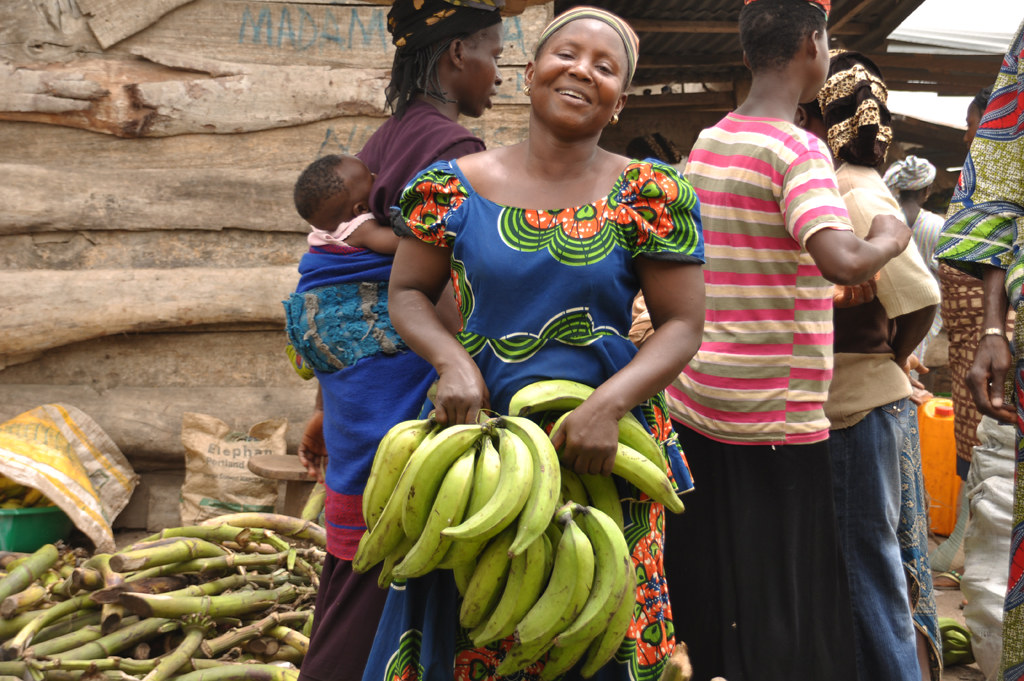
Roots, tubers and bananas in Central Africa are well suited for climate change

As the Great Lakes Region of Central Africa becomes hotter and wetter, root, tuber and banana crops (RT&B crops) will continue to be suitable for the region. A study recently published in Agricultural Systems concludes that future rainfall and temperature shifts due to climate change will be somewhat favorable to RT&B crops in the region apart from potatoes.

“There’s little doubt these days that our climate will be quite different in the future,” said Rhys Manners, a data scientist based in Kigali, Rwanda with the International Institute of Tropical Agriculture (IITA) and co-author of the study. “But we’re not certain how these changes will impact the suitability of certain crops in specific regions, by mid-century. This study aimed to find out.”

By determining the suitability of crops in specific locations, researchers can provide advice like planting dates and variety selection so that farmers can mitigate the impact of climate change. The data can also help decision-makers plan long-term strategies and policies.

The study used modelling to analyze the future impacts of climate change on crop suitability of RT&B crops in the Great Lakes Region (GLR) of Central Africa. The GLR consists of seven countries (Burundi, the Democratic Republic of the Congo, Kenya, Malawi, Rwanda, Tanzania, and Uganda) that border the African Great Lakes.

The study focused on four RT&B crops: banana, cassava, potato, and sweetpotato. They contribute up to 47% of daily caloric intake in the GLR. RT&B crops are critical for household food security and livelihoods in the GLR where smallholder farming systems are largely based on these crops. The potential impact of climate change on the livelihoods of these farmers can be devastating if a proactive approach isn’t implemented.

“We know that RT&B crops have a potential resilience to climate change,” said Manners. “Some have high drought stress tolerance and can thrive under high temperatures. But compared to other crop groups, we’re not certain how they will perform under the projected climate change in the GLR.”
Read more

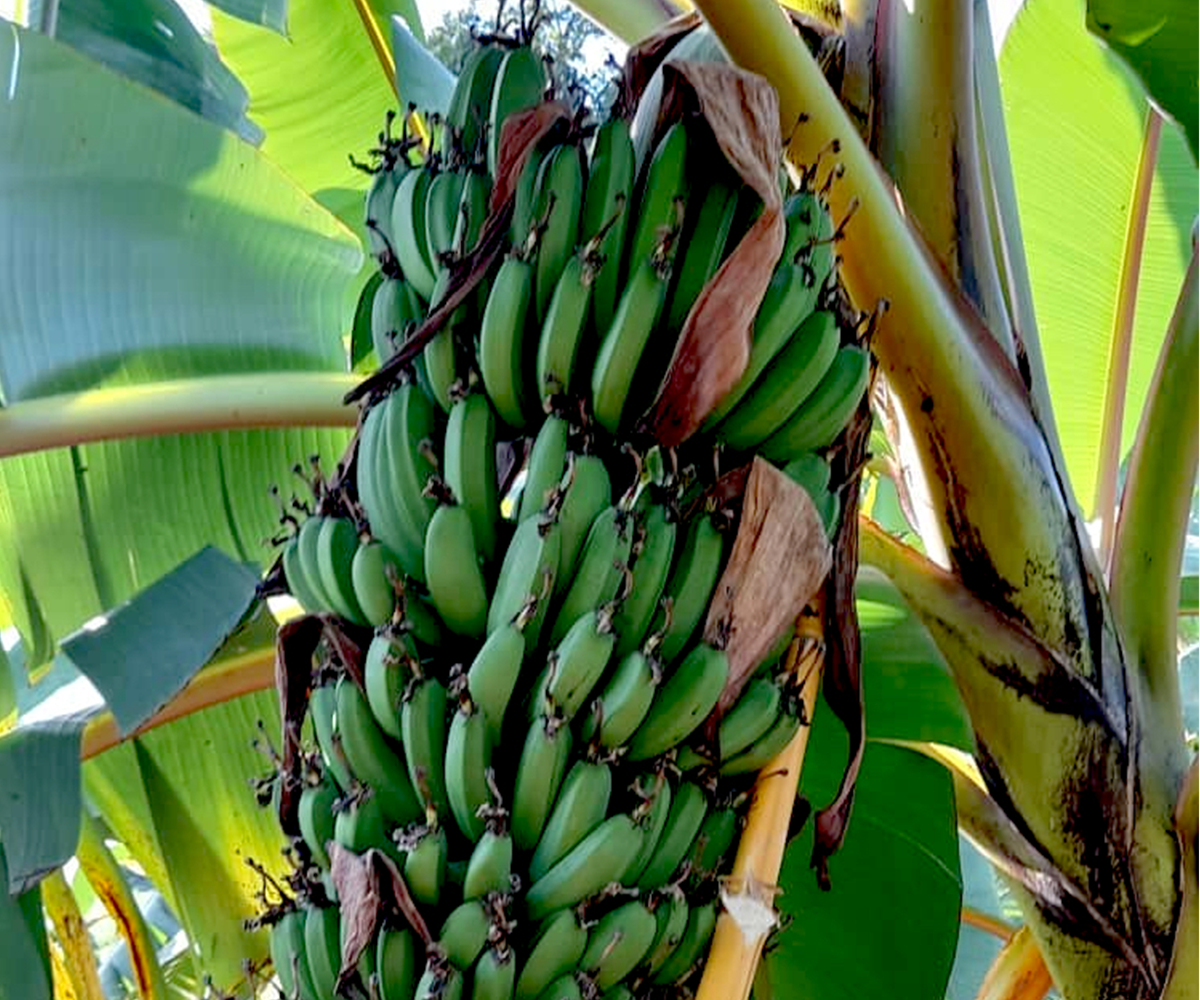
Scientists identify markers associated with resistance to the banana weevil borer

Scientists at IITA and their collaborative partners have identified molecular markers associated with resistance to banana weevil—one of the most destructive pests of the crop that can lead up to 100% yield loss.

Identifying the markers on a crop’s genome in a population derived from a cross from two banana accessions, “Monyet” and “Kokopo”, will aid the development of resistant varieties—the most effective way to control the pest for resource-poor smallholder farmers.

The banana weevil borer, Cosmopolites sordidus (Germar), is one of the major banana pests that constrains banana and plantain production, both important staple foods and sources of income for millions of people globally and in sub-Saharan Africa in particular. The larvae of the banana weevil feed on the underground banana stem, called a corm, impeding nutrient and water uptake and causing plants to topple.

Yield losses from this pest worsen with every subsequent ratoon (growth of a new plant from the suckers after harvesting the parent crop) due to the build-up of the infestation. Yield losses of up to 100% can be realized because of the complete disappearance of the banana mat.

Scientists identify markers associated with resistance to the banana weevil borer
The destructive banana weevil can cause up to 100% yield loss.

While cultural methods can reduce the pressure of weevils in a banana field, growing resistant varieties is the only sustainable way of combatting this pest. Unfortunately, most cultivated banana varieties, including the East African highland cooking bananas (Matooke) and plantain, are susceptible to this pest.

The identified weevil-resistance markers will be used to develop molecular tools for marker-assisted breeding in bananas.

While banana improvement through crossbreeding has registered success as hybrids have been released in East Africa and the rest of the banana-growing world, the process is slow, tedious, and expensive, taking up to two decades. The use of molecular markers promises to speed up the selection process by selecting the good, resistant material in the nursery, reducing the long selection cycles in the field that take many years.

“This is exciting news for the banana breeding community. Previous studies on weevil resistance had only identified banana accessions resistant to weevils. This is the first time that resistance to weevils has been localized at the genomic level”, says Brigitte Uwimana,  IITA banana molecular breeder who led this study.

Because bananas are polyploid (that means they have more than two copies of each of their 11 chromosomes), the scientists had to use a non-conventional way of identifying the region associated with resistance, a method called “Continuous mapping”. The identified markers associated with resistance to weevil damage will be used to develop molecular tools for marker-assisted breeding in bananas.

The work was conducted by the scientists from the IITA (CGIAR) Banana Breeding Programme and Gnomixx BVBA, Belgium, as part of the Breeding Better Banana project funded by the Bill & Melinda Gates Foundation. It is part of the CGIAR Research Program on Roots and Tubers (RTB).

The findings were published in a paper: Continuous mapping identifies loci associated with weevil resistance [Cosmopolites sordidus (Germar)] in a triploid banana population in the Frontiers in Plant Science, 2021. 12(2520); https://doi.org/10.3389/fpls.2021.753241