Genome editing: New breeding tool with potential to sustain agriculture in Africa

Climate change affects the environment extensively in socioeconomic and related sectors, including agriculture and food and nutritional security for the growing global population. To address this urgent need, Africa needs to adopt sustainable intensification of agriculture to close the yield gap in staple crops, where tools, including biotechnology and traditional approaches, are recommended for crop improvement.

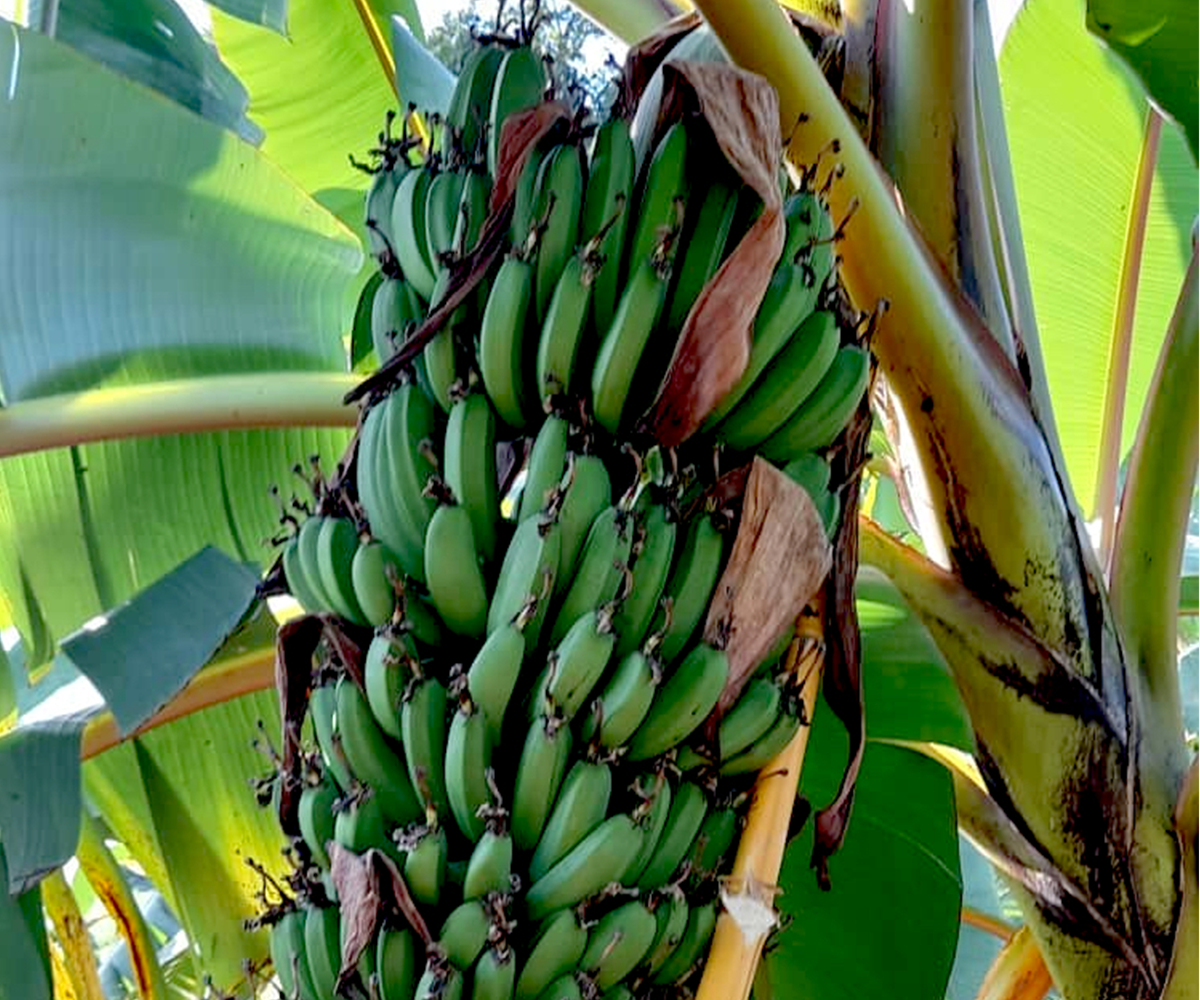
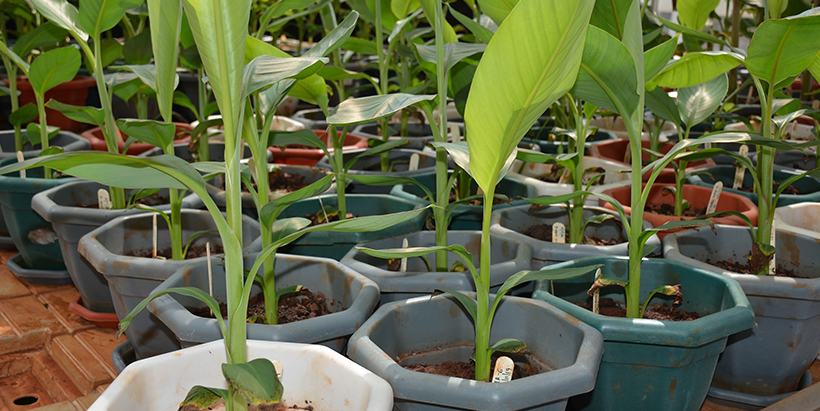
Gene edited banana in a greenhouse. Photo credit: Jaindra Tripathi/IITA

The recent study titled “Genome Editing for Sustainable Agriculture in Africa” published in the journal Frontiers in Genome Editing revealed the need and efficiency of exploring genome editing as an addition to conventional technologies for developing improved crop varieties.

The study noted that CRISPR-based genome editing has rapidly become the most prevalent genetic engineering approach for developing improved crop varieties because of its simplicity, efficiency, specificity, and ease of use. Genome editing technologies allow targeted manipulation of the plant genomes, accelerating breeding efforts to develop improved crop varieties. It can also reduce inputs such as fertilizers and pesticides, increase yields, improve nutrition, and develop climate-resilient crops.

The study, led by Leena Tripathi, Research Director at the IITA, with her team, Valentine Ntui, Easter Syombua, Samwel Muiruri, and Jaindra N. Tripathi, in collaboration with Kanwarpal Dhugga and Zhengyu Wen from the International Maize and Wheat Improvement Center (CIMMYT), Mexico and Steven Runo from the Kenyatta University, Kenya, explores the recent advances and progress in the CRISPR/Cas9-based genome editing efforts with major staple food crops grown in several countries in Africa.

The researchers in Africa use genome editing tools to improve African staple crops for biotic and abiotic stress resistance and improved nutritional quality. The crops under development include disease-resistant banana, maize resistant to lethal necrosis, and sorghum resistant to the parasitic plant Striga and enhanced quality for African farmers.

“The genome-editing tool is one of the powerful technologies available in the crop improvement toolbox, which can be used along with other tools for improving agriculture to feed the world’s rapidly growing population. It can develop improved crop varieties with no foreign gene integration like those created through conventional breeding,” explained Tripathi. She added that genome-edited products are not regulated as GMOs in several countries, including two countries in Africa: Kenya and Nigeria.

Tripathi also added that although many researchers are exploring the potential of genome editing in developing crop varieties for better and more sustainable African agriculture, there is a need for adequate funding and enabling policies to release genome editing products.

As the global landscape of regulatory developments for genome-edited crops is quickly changing, the future looks bright for African agriculture.  The continent is progressing in creating the enabling environment for commercializing genome-edited crop varieties by countries having clear genome-editing regulatory frameworks and biosafety guidelines.

Contributed by Gloriana Ndibalema
Training African scientists on CRISPR technology to adapt to climate change impacts in agriculture

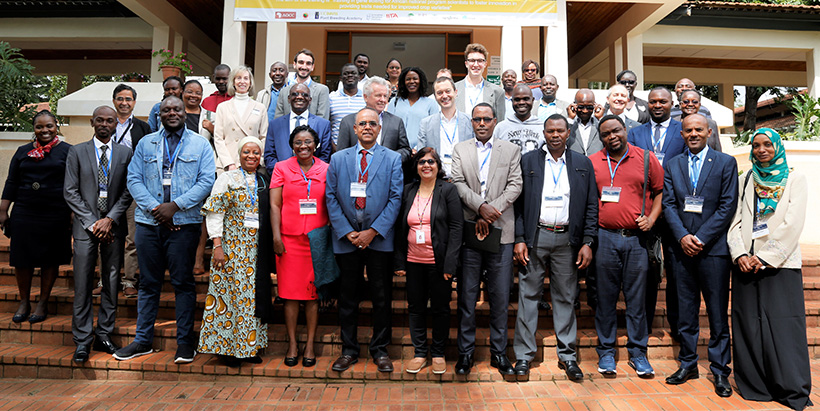
To help reduce food insecurity and malnutrition aggravated by climate change, the International Institute of Tropical Agriculture (IITA) in partnership with the University of California, Davis (UC Davis), the Innovative Genomics Institute (IGI) at UC Berkeley, and other members of the African Orphan Crops Consortium (AOCC), officially launched the African Plant Breeding Academy (AfPBA) CRISPR Course on 23 January 2023, in Nairobi, Kenya, for technical
training in gene editing for crop improvement.

Read more

Over 50 scientists and science communicators trained to communicate on genome editing

The Alliance for Science (AFS), in conjunction with the Open Forum for Agricultural Biotechnology (OFAB) Nigeria, Boyce Thomson Institute, and IITACGIAR, organized a 3-day training for scientists and science communicators on Communicating Gene Editing in Abuja, Nigeria. The training took place on 19−21 September and aimed to provide participants with the appropriate communication skills to communicate on gene editing for food sustainability, nutrition, and security in Africa.

Executive Director of the Alliance for Science, Dr Sheila Ochugboju, opened the event with a keynote speech. She recognized the need for such training events, as a former scientist herself, who completed her postdoctoral research in Oxford University, working on genetic engineering for biological pesticides. She was visibly moved to return to her home country Nigeria, to welcome scientists and communicators creating an enabling environment for world-class science and innovation.

Also, IITA Head of Abuja station, and BASICS II project leader, Prof. Sanni Lateef in his remarks at the opening event encouraged the next generation of scientist-participants to exceed the achievements of the older scientists in terms of scientific research and innovations. “Science is evolving, and we need a new generation of science inventors to keep up with it,” he said.

OFAB Country Coordinator Dr Rose Gidado and IITA Plantain Transformation Scientist Valentine Ntui explained the science of gene editing. They pointed out that genome editing is a revolution for science and medicine that takes advantage of the cell’s DNA repair mechanisms, resulting in many different molecular outcomes.

Read more

IITA partners to deliver a new training course in gene editing for African scientists

The International Institute of Tropical Agriculture (IITA) is pleased to announce its partnership with the University of California, Davis (UC Davis), the Innovative Genomics Institute (IGI) at UC Berkeley, and the African Orphan Crops Consortium (AOCC), to introduce a new course on gene editing as part of the African Plant Breeding Academy (AfPBA). The course will empower 80-100 African scientists to apply the CRISPR-based gene-editing technologies to improve food crops important for African nutritional security for the essential traits.

CRISPR holds enormous promise for making precise desired genetic changes, enabling plant breeders to rise to the challenges of a changing climate and rapidly growing population at the demanded pace.

About the AfPBA CRISPR course

The AfPBA CRISPR course aims to train African scientists engaged in crop improvement, particularly those working in national research institutions desiring to implement or initiate gene-editing programs.

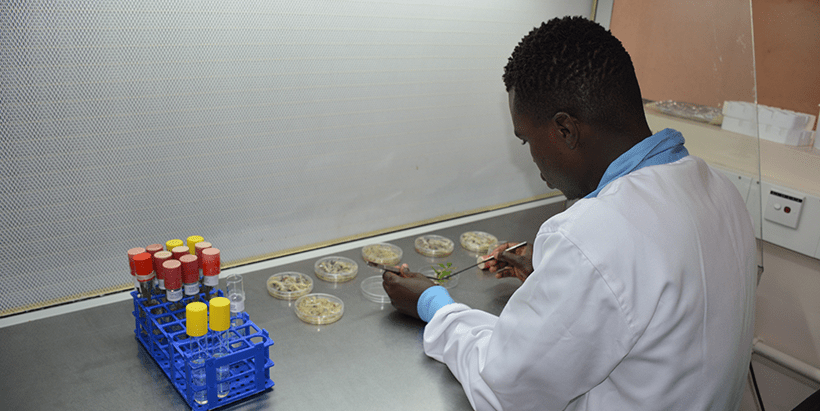
The course is an intensive 6-week program, delivered in three 2-week sessions at IITA hosted by B4A/ILRI hub and World Agroforestry in Nairobi, Kenya, over a period of a year and can accommodate 20 participants per course offering. It focuses on the steps to accomplish gene editing from design through validation. Using banana as a model plant, participants formulate objectives and targets, design plasmids, perform trait delivery to cells, regenerate plants, and validate results. The course prepares participants to develop key traits (e.g., nutritional content, disease resistance, longer shelf life) in crops aligned with their national and institutional priorities.

Uniqueness of AfPBA CRISPR course

This program involves post-course mentorship and ongoing support for sustained lab productivity beyond course completion and the founding of translational partnerships for commercialization and value chain development.

The course leverages genome sequence information being amassed by the AOCC on 101 African orphan crops, including a diversity of vegetables, fruits, nuts, legumes, oilseeds, cereals, and tree species.  Furthermore, it emphasizes the role of CRISPR in the overall scheme of improved cultivar development and in addressing the needs of smallholder farmers. It will support a Community of Practice strongly linked to the disciplines required for product development and launch, improved variety distribution, and farmer adoption.

Read more

Roots, tubers and bananas in Central Africa are well suited for climate change

As the Great Lakes Region of Central Africa becomes hotter and wetter, root, tuber and banana crops (RT&B crops) will continue to be suitable for the region. A study recently published in Agricultural Systems concludes that future rainfall and temperature shifts due to climate change will be somewhat favorable to RT&B crops in the region apart from potatoes.

“There’s little doubt these days that our climate will be quite different in the future,” said Rhys Manners, a data scientist based in Kigali, Rwanda with the International Institute of Tropical Agriculture (IITA) and co-author of the study. “But we’re not certain how these changes will impact the suitability of certain crops in specific regions, by mid-century. This study aimed to find out.”

By determining the suitability of crops in specific locations, researchers can provide advice like planting dates and variety selection so that farmers can mitigate the impact of climate change. The data can also help decision-makers plan long-term strategies and policies.

The study used modelling to analyze the future impacts of climate change on crop suitability of RT&B crops in the Great Lakes Region (GLR) of Central Africa. The GLR consists of seven countries (Burundi, the Democratic Republic of the Congo, Kenya, Malawi, Rwanda, Tanzania, and Uganda) that border the African Great Lakes.

The study focused on four RT&B crops: banana, cassava, potato, and sweetpotato. They contribute up to 47% of daily caloric intake in the GLR. RT&B crops are critical for household food security and livelihoods in the GLR where smallholder farming systems are largely based on these crops. The potential impact of climate change on the livelihoods of these farmers can be devastating if a proactive approach isn’t implemented.

“We know that RT&B crops have a potential resilience to climate change,” said Manners. “Some have high drought stress tolerance and can thrive under high temperatures. But compared to other crop groups, we’re not certain how they will perform under the projected climate change in the GLR.”

Read more

Scientists identify markers associated with resistance to the banana weevil borer

Scientists at IITA and their collaborative partners have identified molecular markers associated with resistance to banana weevil—one of the most destructive pests of the crop that can lead up to 100% yield loss.

Identifying the markers on a crop’s genome in a population derived from a cross from two banana accessions, “Monyet” and “Kokopo”, will aid the development of resistant varieties—the most effective way to control the pest for resource-poor smallholder farmers.

The banana weevil borer, Cosmopolites sordidus (Germar), is one of the major banana pests that constrains banana and plantain production, both important staple foods and sources of income for millions of people globally and in sub-Saharan Africa in particular. The larvae of the banana weevil feed on the underground banana stem, called a corm, impeding nutrient and water uptake and causing plants to topple.

Yield losses from this pest worsen with every subsequent ratoon (growth of a new plant from the suckers after harvesting the parent crop) due to the build-up of the infestation. Yield losses of up to 100% can be realized because of the complete disappearance of the banana mat.

Scientists identify markers associated with resistance to the banana weevil borer
The destructive banana weevil can cause up to 100% yield loss.

While cultural methods can reduce the pressure of weevils in a banana field, growing resistant varieties is the only sustainable way of combatting this pest. Unfortunately, most cultivated banana varieties, including the East African highland cooking bananas (Matooke) and plantain, are susceptible to this pest.

The identified weevil-resistance markers will be used to develop molecular tools for marker-assisted breeding in bananas.

While banana improvement through crossbreeding has registered success as hybrids have been released in East Africa and the rest of the banana-growing world, the process is slow, tedious, and expensive, taking up to two decades. The use of molecular markers promises to speed up the selection process by selecting the good, resistant material in the nursery, reducing the long selection cycles in the field that take many years.

“This is exciting news for the banana breeding community. Previous studies on weevil resistance had only identified banana accessions resistant to weevils. This is the first time that resistance to weevils has been localized at the genomic level”, says Brigitte Uwimana,  IITA banana molecular breeder who led this study.

Because bananas are polyploid (that means they have more than two copies of each of their 11 chromosomes), the scientists had to use a non-conventional way of identifying the region associated with resistance, a method called “Continuous mapping”. The identified markers associated with resistance to weevil damage will be used to develop molecular tools for marker-assisted breeding in bananas.

The work was conducted by the scientists from the IITA (CGIAR) Banana Breeding Programme and Gnomixx BVBA, Belgium, as part of the Breeding Better Banana project funded by the Bill & Melinda Gates Foundation. It is part of the CGIAR Research Program on Roots and Tubers (RTB).

The findings were published in a paper: Continuous mapping identifies loci associated with weevil resistance [Cosmopolites sordidus (Germar)] in a triploid banana population in the Frontiers in Plant Science, 2021. 12(2520); https://doi.org/10.3389/fpls.2021.753241